Dynamic Movement Intervention
Intensive Therapy for Babies, Toddlers, Children and Adolescents
Dynamic Movement Intervention (DMI) is the foundation of our intensive therapy at our physiotherapy practice in Eldagsen. We support children with motor developmental challenges through structured intensive therapy phases, individually adapted to each child’s situation.
Only a limited number of appointments for intensive therapy sessions are still available for the remainder of this year.
Intensive:
October 26th to October 30th
We have already started a waiting list for 2027 and are happy to accept inquiries.
What is Dynamic Movement Intervention (DMI)?
When a child needs support in their development, parents often have questions:
What is right for my child? What options are available?
Dynamic Movement Intervention (DMI) is a physiotherapy-based approach in which children are guided through specifically designed movement situations.
These situations allow the child to respond with its own motor strategies.
A central part of the approach includes working with:
- different positions
- balance
- the influence of gravity on movement and posture
Each session is individually adapted and based on the child’s abilities and current situation.
Who is DMI used for?
DMI is used in physiotherapy practice for children with motor or neurological developmental challenges, for example:
- Cerebral palsy
- Spina bifida
- genetic syndromes (e.g. Down syndrome)
- global developmental delay
- muscle tone differences (hypotonia / hypertonia)
- premature infants
It is assessed on an individual basis whether this approach may be considered, based on physiotherapeutic evaluation and medical consultation.

Training / Qualifications
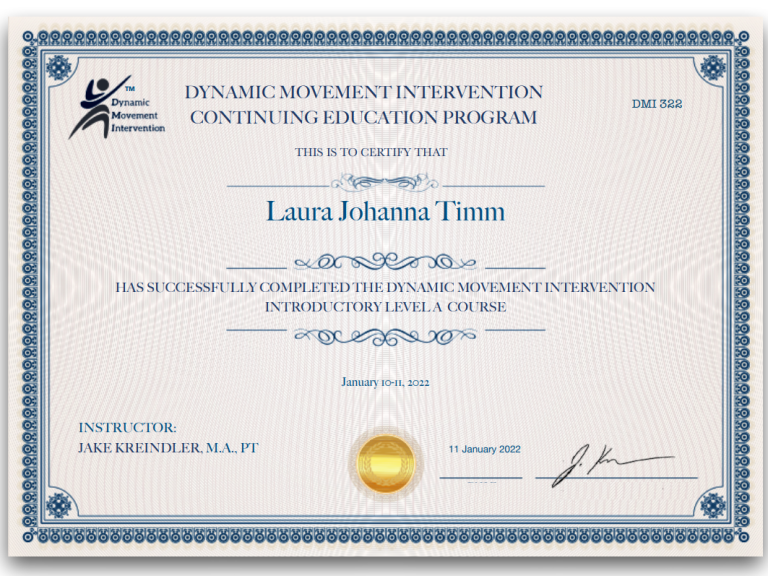
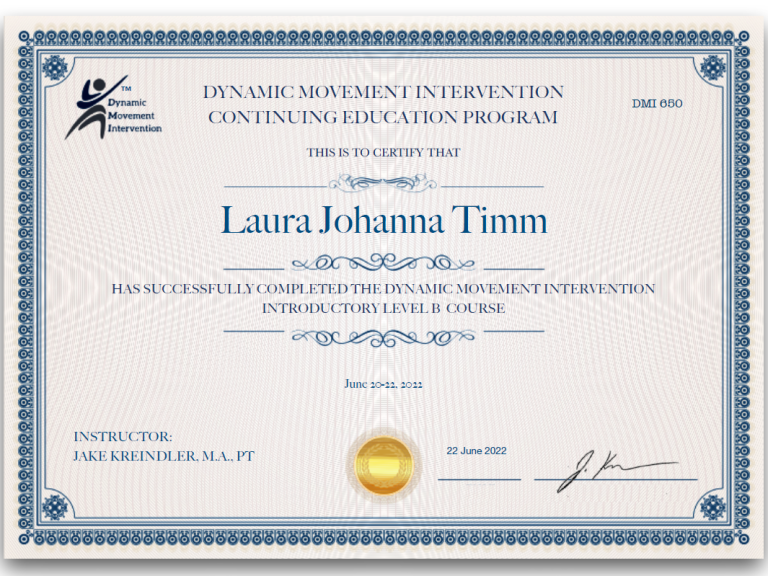
Laura Johanna Timm started her training in Dynamic Movement Intervention (DMI) in January 2022 directly with the founders of the method, Jake Kreindler and Jo-Anne Weltman.
According to the training provider, she was the first DMI therapist in Germany.
Since 2024, DMI has been regularly applied in her own practice.
Laura Johanna Timm has completed the following courses:
Introductory Level A (2022)
Introductory Level B (2022)
Introductory Level C (2023)
Note: The content presented describes experiences and structured procedures. It does not constitute a promise of healing and does not replace individual medical advice.

DMI Intensive Therapy Process
- Physiotherapeutic evaluation
- Definition of therapy content
- Implementation of intensive therapy sessions
- Continuous adaptation throughout the process
Each treatment is individually adapted depending on the child’s tolerance and current condition.

Intensive Therapy for Babies, Toddlers, Children, and Adolescents
DMI therapy can be applied to babies from 3 months, toddlers, children, and adolescents.
DMI as Intensive Therapy
In our practice, DMI is applied within intensive therapy phases.
This means:
Over a defined period of time, multiple therapy sessions take place in which the child repeatedly engages with similar movement challenges.
This structured approach includes:
- repeated movement experiences
- close therapeutic adaptation
- repeated implementation of therapy sessions
What is important to us in therapy?
The focus is not on a method, but on the child.
Each child brings individual abilities, experiences and developmental steps.
Therapy is adapted accordingly.
What matters to us:
- attentive therapeutic guidance
- clear structure within therapy
- involvement of parents
Parents gain insights into the therapy and receive suggestions for everyday life.
Additional Measures within DMI Therapy
As part of DMI therapy, we use additional measures depending on the individual situation, which are directly integrated into the treatment.
The selection is based on a physiotherapeutic assessment. These measures are incorporated into the treatment process and are integrated into the treatment process alongside active movement therapy.
NISE-Stim
NISE-Stim is a non-invasive electrical stimulation method in which impulses are delivered via electrodes. In our practice, it is used as an adjunct to active therapy and is individually integrated into the treatment process.
Galileo Training
Galileo is a vibration system that can be used in therapy within various physiotherapeutic applications.
Intensive
Introductory-Intensive
Duration: 1-2 days
Therapy sessions: 1-4
max. sessions per day: 1-2
Mini-Intensive
Duration: 3 days
Therapy sessions: 3-6
max. sessions per day: 2
Intensive
Duration: 5-15 days (weekends off)
Therapy sessions: 10-30
max. sessions per day: 2
FAQ | DMI-Therapy
You can find more Information on our FAQ page.
Why is DMI not widely known yet?
DMI was developed in 2021 by Jake Kreindler and Jo-Anne Weltman in the USA and is still relatively new in Germany.
What should you and your child bring to therapy?
- Comfortable clothing (ideally long pants)
- Sturdy footwear
- Something to drink
- Favorite toy to support participation
- Latest report from your child’s doctor
How is DMI therapy prescribed?
A private medical prescription for physiotherapy is required to participate in a DMI intensive therapy program.
We will be happy to explain in a personal consultation which information should be included in the prescription.
Please contact your health insurance provider before treatment begins to clarify whether and to what extent the costs may be reimbursed or subsidized. DMI intensive therapy is billed as a private service.
How do I register my child for therapy?
Appointments can be made by phone or via the contact form.
How much does DMI therapy cost?
The current fee is 150 € per 60-minute treatment session.
Effective January 2027 (Subject to change and price adjustments. The fee agreement valid at the start of treatment shall apply.)
Sustainability and Transfer into Daily Life
IIntensive therapy phases include structured movement processes. Through continuous observation and guidance, parents gain insights into therapy and receive suggestions that can be integrated into everyday life.
Supplement to regular care
DMI therapy complements regular physiotherapy at your child’s local practice.
Interdisciplinary collaboration
On your request, we provide therapy reports and are available for professional exchange with the child’s local therapists.
Parental guidance
Parents gain insights into the therapy and receive suggestions for everyday life.
Personal Consultation and Contact
Phone: +49 5044 8808575
Email: laura.timm@diephysiotherapiepraxis-eldagsen.de
Adress: Lange Straße 41, 31832 Springe, Germany
Every child is unique.
We offer consultations to assess physiotherapy support in each case.
After an initial consultation, a short preparation form can be provided if needed.
Notice
The content of this website is provided for general informational purposes only. The selection of physiotherapeutic interventions is always made on an individual basis, based on a physiotherapeutic assessment and in coordination with the treating physician. Treatment outcomes cannot be guaranteed.
Wir freuen uns auf Sie!
